
Top Signs You Need Garage Door Service – Don’t Ignore These
Most “warning signs” articles lump a squeaky roller in with a fraying cable, but one costs you a little lubrication and the other can take out the whole door within a couple of days. The signs that you need garage door service aren’t all created equal, so treating them equally is how homeowners end up delaying the ones that actually matter. Here’s the short answer: a frayed cable, a sagging side, or a loud bang from the spring area means stop using the door now. Everything else falls into “schedule it soon” or “tune-up territory.” If you’d rather not sort that out yourself, call (888) 561-7809 and we’ll help you triage it.
Why Triage Beats a Generic Checklist
Search “signs you need garage door repair” and you’ll get the same flat list every time: noisy door, slow door, dented panel. The trouble is a list treats a cosmetic rattle and a structural failure as the same priority, and homeowners who are already busy read the whole thing as “probably fine for now.” In our experience, the useful question isn’t whether the door is acting up; it’s how fast that symptom is likely to turn into a bigger, costlier problem.
Garage doors fail on a predictable schedule because the parts wear at different rates. Springs and cables carry the door’s entire weight and are under constant tension, so when they go, they go suddenly. Hinges, rollers, and sensors wear slowly and announce themselves early. We organize the warning signs below into three tiers based on urgency, so you know what to stop doing, what to book, and what to watch through a Newark winter.
Here’s how the tiers break down:
- Tier 1 (stop using the door): Visible cable fraying, one side sagging, loud bang from the spring area.
- Tier 2 (book service this week): Slow reversal, uneven floor gap, motor running without moving the door.
- Tier 3 (tune-up territory): Seasonal squeaks, minor drift, shorter remote range.
Every tier is a genuine signal. The difference is how quickly you need to act on it.
Tier 1: Stop Using the Door Now
These three symptoms mean the door is no longer safe to operate, and the correct action is to leave it closed and disconnect the opener when you can do so safely. Don’t try to lift or inspect the internal mechanism yourself; garage door springs and cables are under extreme tension and can cause serious injury if a worn part lets go during handling. This is trained-professional work.
- Visible cable fraying. A cable that looks like a single strand has unwound is close to parting. When a cable snaps, the door can drop unevenly or jam, and the risk of damage climbs quickly.
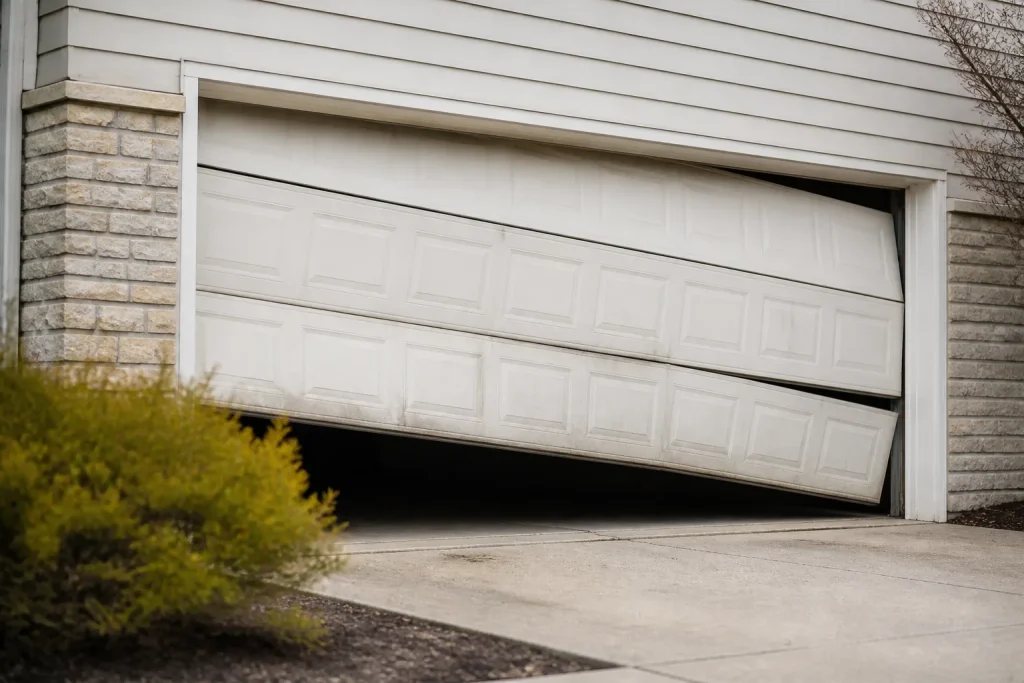
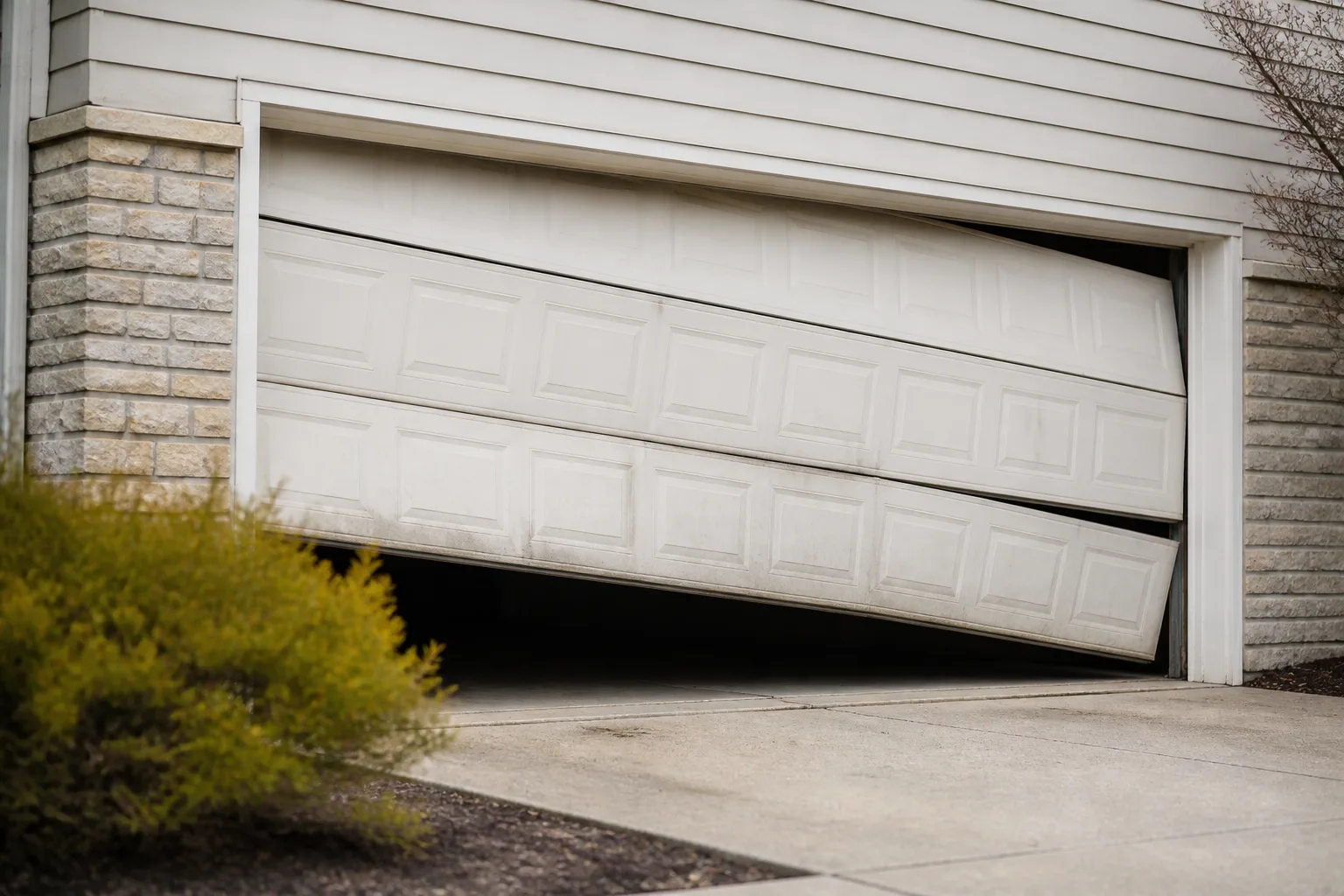
- One side of the door sagging. A tilted door usually means a wound spring or a cable on one side has failed. The door is now being held by a partial system, and the next operation can finish the job.
- A loud bang from the spring area. That crack is often a torsion or extension spring breaking. The door may look fine; it isn’t. The counterbalance that holds the door has failed, and the opener is dragging dead weight.
Spring repair is a job many generalists avoid or refer out, and for good reason: it’s the most common and most dangerous point of failure. We handle garage door spring repair as a core specialty, not an afterthought. If any of these three symptoms shows up in a Newark home, call before you run the door again.
Tier 2: Schedule Service This Week
Tier 2 symptoms don’t demand a full stop, but they signal worn components approaching failure and shouldn’t sit for weeks. Each one points to a part that’s aging faster than the rest of the system.
- Slow reversal response. If the door takes noticeably longer to reverse when it contacts something, the safety sensor or the opener’s force setting needs attention. This is a safety function, so it doesn’t wait.
- Uneven gap at the floor. Daylight or a draft under one side suggests the door is out of balance or the track has shifted. Left alone, it strains springs and the opener and can widen.
- Opener runs but the door doesn’t move. A motor that hums without lifting points to a stripped gear, a broken drive, or a decoupled trolley. The good news is this is often an opener fix, not a door replacement. If you have a Genie or a Clopay door with a major-brand opener, we diagnose the specific unit rather than treating every opener the same. That’s garage door opener repair territory, and it’s worth a call before the motor burns itself out.
Left in Tier 2 for a few weeks, any of these can slide into Tier 1. Booking while it’s still an adjustment saves you a bigger repair.
Tier 3: Tune-Up Territory
These are the symptoms that don’t require urgency but shouldn’t be skipped past winter. They’re the door telling you it needs attention, not that it’s failing. Still, none of them improve on their own.
- Seasonal squeaking. Rollers, hinges, and the spring hardware announce dry or worn points. Sometimes this is as small as lubrication; sometimes it’s a warning that metal is wearing.
- Minor drift. A door that creeps slightly out of position or won’t sit perfectly at the top or bottom can indicate a balance issue in its early stages.
- Remote range reduction. When your remote only works up close, the opener or its antenna is the likely cause, not the door itself.
For a Wayne Dalton or Amarr door, these small signals are often best handled at the same visit as a proper balance check. Addressing them in fall, before cold sets in, is the smartest move for Newark homeowners.
The 30-Second Self-Test for Failing Springs
You can check whether your springs are still carrying the door’s weight correctly with one simple test, done entirely by hand. Disconnect the opener first so it can’t fire mid-test. With the door closed, pull the manual release and lift the door to about waist height, then let go. A properly balanced door holds roughly where you left it.
Here’s what the result tells you:
- Door holds or moves only slightly: springs are still carrying the load. You’re likely in Tier 3, if anything.
- Door drops fast or won’t stay up: the springs have lost their lift or are failing. Stop here and book service.
- Door wants to rise on its own: the springs are overtensioned. Also worth a professional look.
Run this test as a check, not an invitation to repair. The moment a spring or cable looks damaged, quit and call. This test only tells you whether a professional visit is needed; it’s not a fix.
Why Newark Springs Fail More in Winter
Newark winters are hard on garage door hardware because most garages aren’t heated. The steel in springs and cables expands and contracts as temperatures swing, and repeated cycles work-hardens the metal until it reaches its breaking point. The stretch of November through February sends the highest volume of spring and cable failures we see, and it’s rarely the loosening-springs-over-time story; it’s a sudden crack on a cold morning.
That seasonal pattern is why we tell Newark homeowners to get ahead of it. A fall tune-up catches a tired spring before the cold betrays it, and the weather-tightness of the door matters too: an uneven floor gap lets freezing air in and the opener fights the cold every cycle. For Genie and Chamberlain setups, a seasonal check keeps the sensors and force settings honest when the temperature drops.
When the door does fail in the cold, we treat it as what it is. We answer 24/7. Fast dispatch from 7am to 7pm, Sunday through Friday. A call outside dispatch hours is booked into the next opening, Sunday through Friday, 7am to 7pm.
When to Call a Pro
Call a professional any time a Tier 1 symptom shows up, and don’t wait to schedule Tier 2. The balance test above is a check, not a repair. If you’re in Newark and the door is acting up, garage door repair through a trained technician is the safe move, and for a failing spring or cable it’s essential. Our technicians have up to 10 years of experience, and we work on the major brands you’re most likely to own.
If a small sound is the only issue, we’ll tell you honestly it’s a tune-up. We won’t sell you a door you don’t need.
Related services in Newark: if you’re weighing a fix against a replacement, our Newark Garage Door Repair Pros page lays out the full range from same-day repair to complete installation.
The Bottom Line
Not all garage door warning signs deserve the same response, and treating a frayed cable like a squeaky roller is how people end up with a bigger, costlier repair on their hands, often on the first cold morning of the year in Newark. Stop the door for sagging, fraying, or a bang. Book within the week for slow reversal, uneven gaps, and an opener running on its own. Tune up the rest before winter. One call covers the range from spring repair to opener work to a new door, so you won’t need to coordinate multiple contractors if the diagnosis shifts.
If you’re in Newark and need help, Newark Garage Door Repair Pros offers free estimates. Call (888) 561-7809. We answer 24/7. Fast dispatch from 7am to 7pm, Sunday through Friday. The price is quoted and agreed before any work starts.
Frequently Asked Questions
Stop using the door and book repair if you see cable fraying, a sagging side, or hear a bang from the spring area. Book service within the week for slow reversal, uneven gaps, or an opener that runs without moving the door. Seasonal squeaks, minor drift, and shorter remote range are tune-up items. If you’re unsure, run the balance test above or call (888) 561-7809 for guidance.
A loud crack from the spring area usually means a torsion or extension spring has broken. The door may still look normal, but the counterbalance that holds its weight is gone, and the opener is dragging the full load. Stop operating the door and call for spring repair before using it again.
No. Cables and springs are under extreme tension, and handling a worn part can cause serious injury if it lets go. Leave the door closed, disconnect the opener if you can do so safely, and call a trained technician. This is not a do-it-yourself repair.
Unheated garages let the metal in springs and cables expand and contract with the temperature swings of a Delaware winter. That cycling works the steel until it reaches its breaking point. The stretch from November through February is when the most spring and cable failures happen, which is why a fall check is worth doing.
Written by the team at Newark Garage Door Repair Pros.
Need Garage Door Help?
Call Newark Garage Door Repair Pros - the local pro we connect you with is licensed and insured, here with fast help in Newark.
(888) 561-7809