
Last updated November 22, 2026
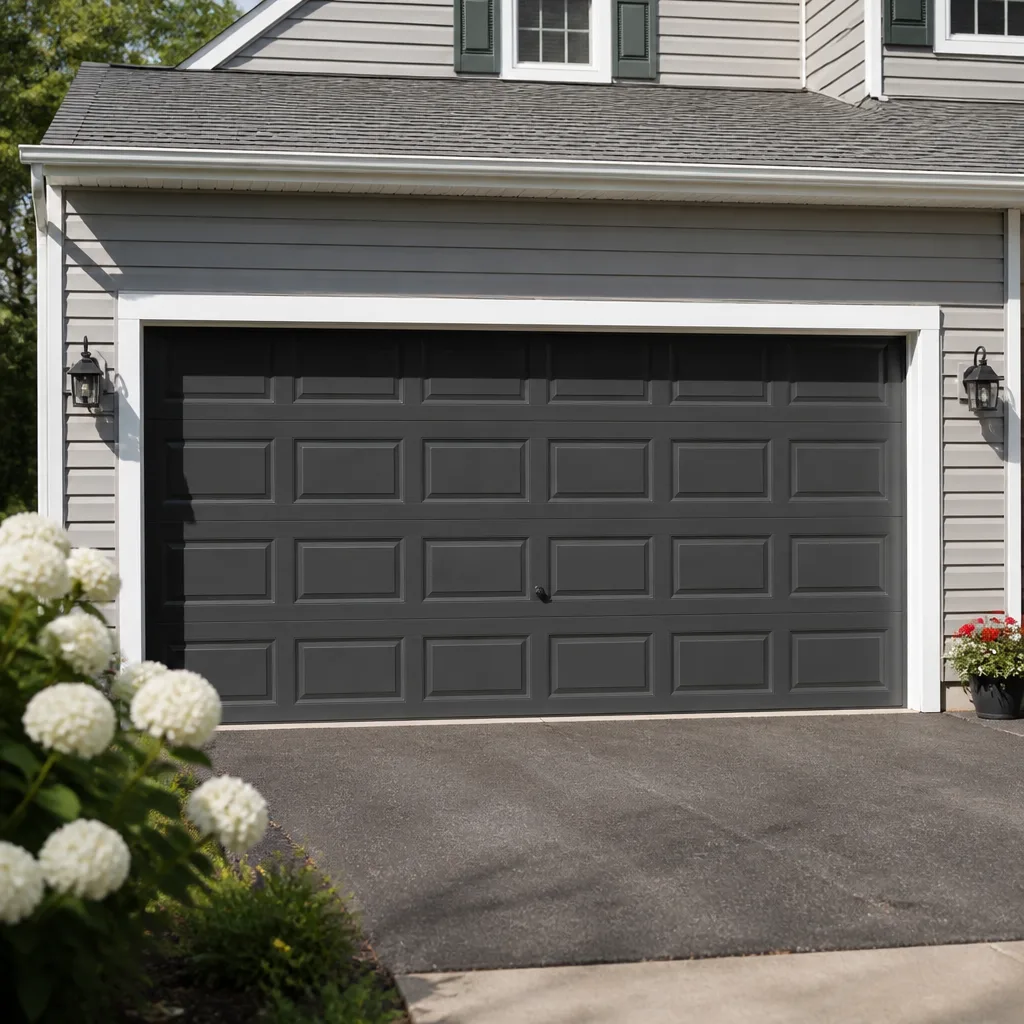 Raised-panel steel
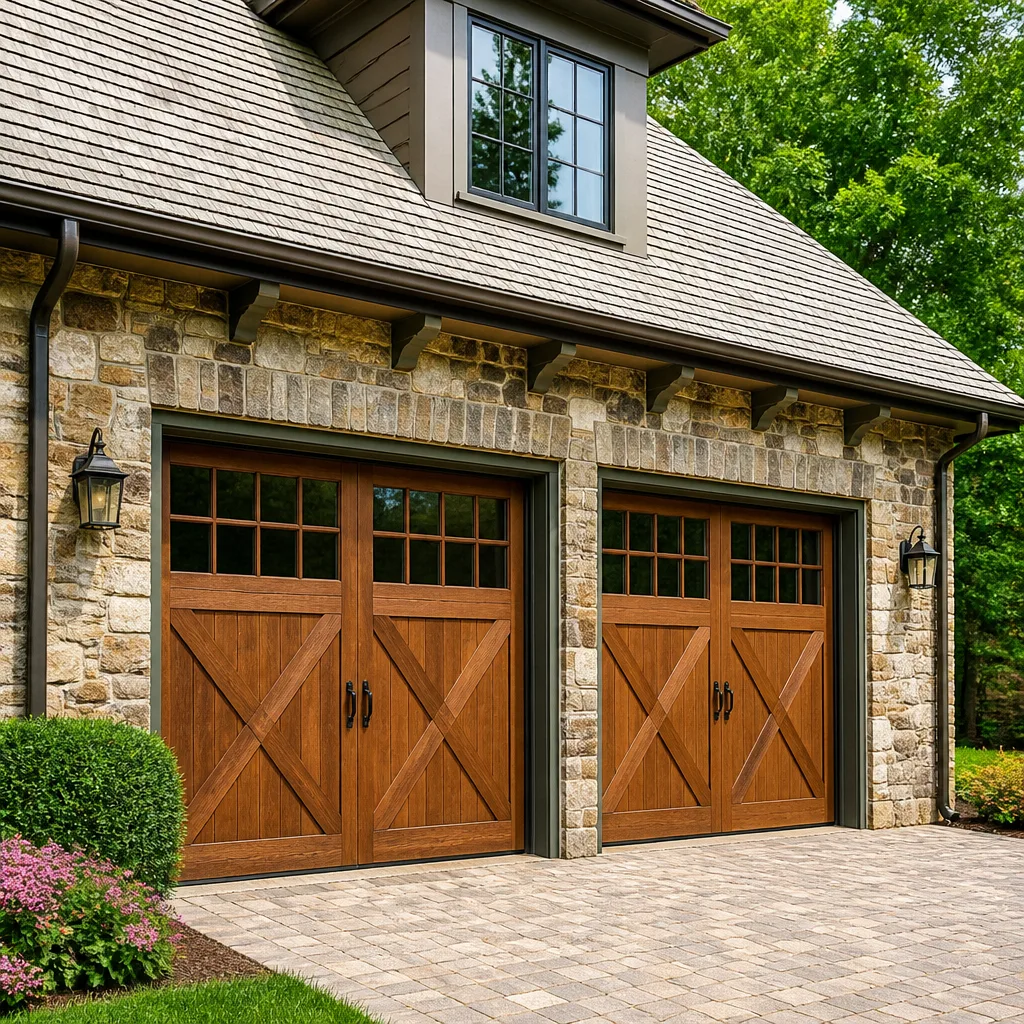 Carriage house
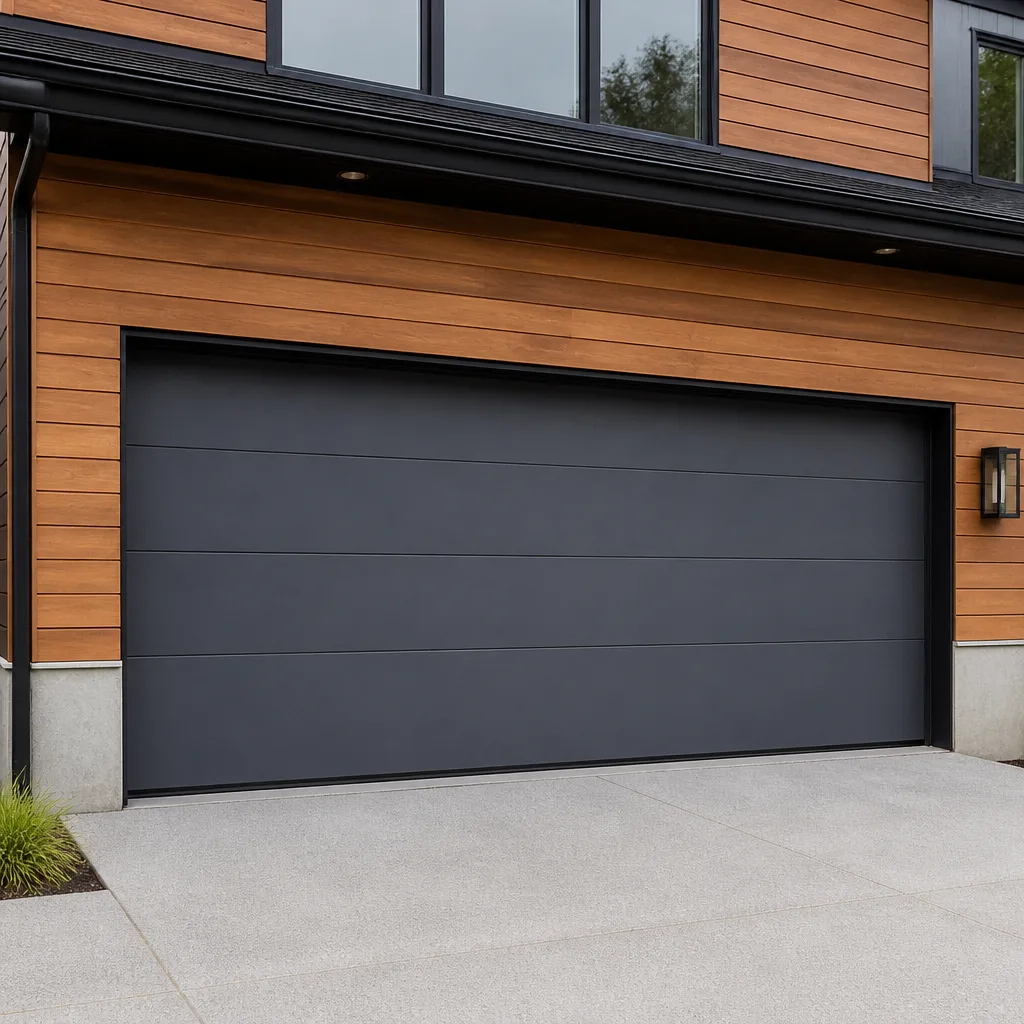 Modern flush
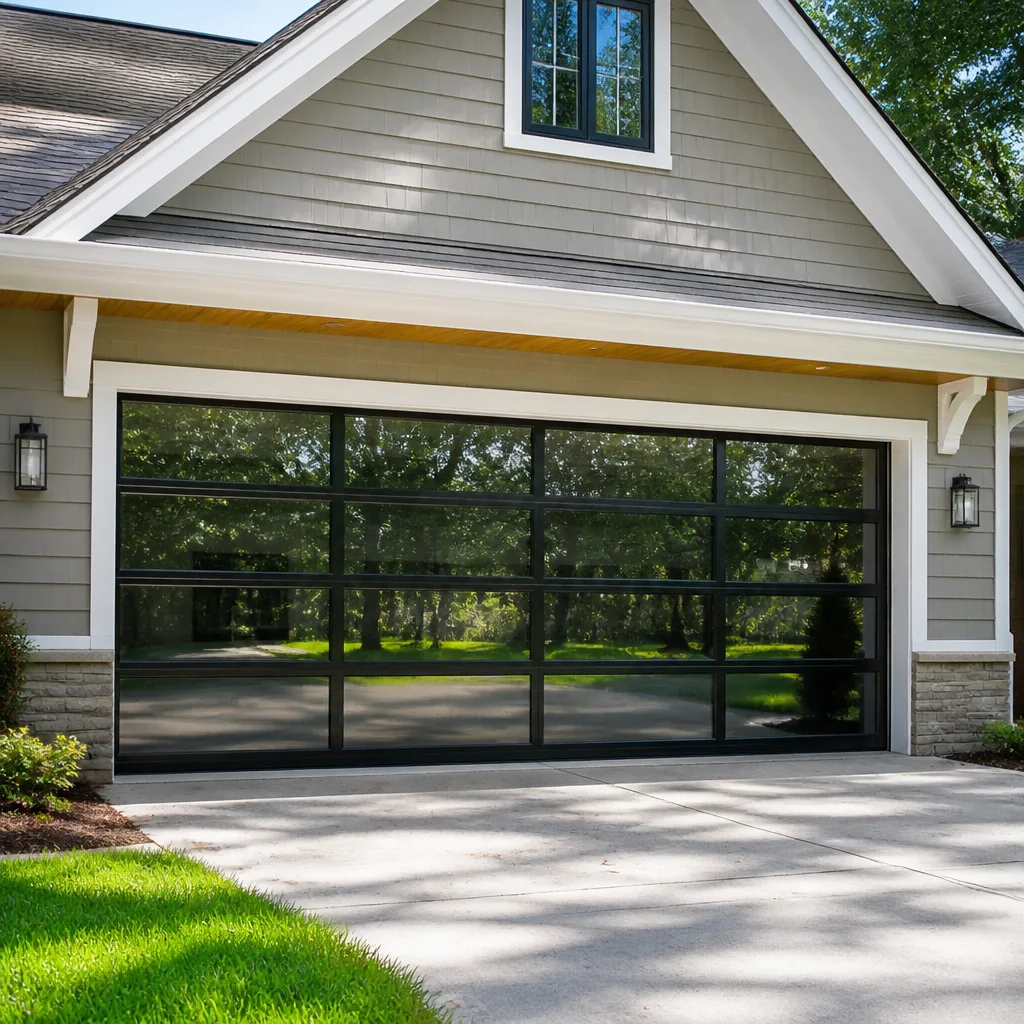 Full-view glass
 LiftMaster openers
 Chamberlain openers
Full 25-point door and opener safety check with every visit - springs, cables, rollers, tracks, and your LiftMaster or Chamberlain opener included
You get a price before we start. It does not change when the pro arrives.
Get your free estimateGarage Door Permits, Codes & Inspections in Newark, DE: What You Need to Know
Most homeowners in Newark assume a garage door is like a fence or a front door: you buy one, you hang it, you’re done. But a garage door is one of the largest moving assemblies on a house, and in Newark it sits in a spot the building code pays close attention to. Add in a new opener and the paperwork picture changes again. If your home was built before 1994 and you’re planning a full replacement, there’s a real chance you’ll need a City of Newark permit and a wind-load check that almost no contractor mentions in the sales pitch. This guide walks through when permits are actually required, how wind-load ratings work in New Castle County, how unpermitted work surfaces during a home sale, and what the inspection timeline looks like from start to sign-off. We work in Newark and these are the questions we hear most.
Quick Answer
In Newark, DE, a like-for-like garage door replacement usually does not require a permit, but a full structural change to the opening, a change in door weight class, or adding a new opener on a home built before 1994 often does. Any new or replaced assembly has to meet the wind-load requirements the City of Newark enforces through the building department, and the door’s label has to show it. Always confirm with the city’s building department before ordering, because the rules can shift by project type and by the specifics of your house.
Styles & brands we work with
- Raised-panel steel
- Carriage house
- Modern flush
- Full-view glass
- LiftMaster openers
- Chamberlain openers
Table of Contents
- When Does a Garage Door Project Need a Permit in Newark, DE?
- How Delaware Wind-Load Requirements Affect Your Door Choice
- Permit Required vs. Optional: What’s the Difference?
- How Unpermitted Garage Door Work Shows Up at Sale
- The Inspection Timeline: Permit Pull to Final Sign-Off
- HOA Rules in Newark-Area Communities and How They Overlay Code
- Opener Safety Requirements and Why They Matter
- What Paperwork to Keep After the Job
When Does a Garage Door Project Need a Permit in Newark, DE?
The short answer: it depends on what’s actually changing. A homeowner swapping a tired 1980s single-car door for a modern equivalent of the same size and weight class is usually doing cosmetic-level work that the City of Newark’s building department treats differently from a change that affects the structure of the opening. The trigger points tend to be anything that alters the size of the opening, changes the header, adds new framing, or increases the load on the surrounding structure.
Here’s how we walk Newark homeowners through the decision:
- Replacing a door with an identical size and weight class. Usually no permit needed, but the door still has to comply with current wind-load requirements, and the label showing that compliance has to be on the door.
- Changing from a single door to a double door, or vice versa. This involves new framing and a changed header; a permit is almost always required.
- Adding a garage where one didn’t exist. Full structural permit, plan review, and inspection at multiple stages.
- Replacing an opener. On its own, usually no permit, but the new opener must meet the current federal safety standard for entrapment protection, and some jurisdictions want to see the installation documented.
- Adding a new opener while installing a new door on a pre-1994 home. This is the combination that surprises people. Older homes often don’t have the wind-load documentation the current code expects, and the building department may want the full assembly reviewed together.
If your project falls into any of the last four categories, call the City of Newark building department before you order anything. They’ll tell you what drawings and documentation they want. We can help you read the door’s specification label and figure out the wind-load rating before you commit to a brand, and that’s often the difference between a permit that sails through and one that gets sent back for clarification. Our team works with Clopay, Amarr, Wayne Dalton, and other major brands, and we know which product lines carry the labels the local department expects to see. For more on how a replacement plays out on the ground, see our guide to garage door repair in Newark.
How Delaware Wind-Load Requirements Affect Your Door Choice
Garage doors are the largest opening in the building envelope, and in New Castle County they’re treated as a structural component subject to wind-load design. That means the door you install has to be rated for the wind pressure it’s likely to see, and the rating has to be documented on the door itself, usually by a label or a manufacturer’s certificate.
What homeowners in Newark need to know:
- Wind-load ratings are per-door, not per-brand. Two doors from the same manufacturer can carry different ratings depending on model, size, and reinforcement.
- The design pressure for your specific address is what matters, and that depends on factors including exposure category, building height, and whether the opening is on the windward or leeward side. The building department can tell you what number they need to see.
- Labels matter. A door without a wind-load label is a door the inspector can’t verify. That’s true whether the door came from Amarr, Wayne Dalton, Raynor, or anyone else.
- Reinforcement is often a separate line item. Some doors need struts or heavier gauge sections to hit the required rating, and the spec sheet will say so.
- The door and the opener are separate systems under the code. A high wind-load door doesn’t reduce the opener safety requirements and vice versa.
If you’re choosing a door for a Newark home, ask your contractor to show you the wind-load certificate for the specific model and size before the order goes in. We’ve seen homeowners get pulled into an upgrade conversation that wasn’t actually necessary, and we’ve also seen doors ordered without the label and rejected at inspection. Neither is fun. Confirm the number with the city first, then match the door to it.
Permit Required vs. Optional: What’s the Difference?
A required permit is a legal step. An optional permit is when the city will accept an application even though the scope of work might not strictly require one. These get confused a lot, and the difference matters because it affects your timeline, your cost, and your paper trail at sale.
Here’s how the two look in practice:
When a permit is required
- Any structural change to the opening, including new framing or a modified header.
- Adding a new garage structure to the property.
- Converting a carport to an enclosed garage.
- A change in door size or weight class that affects the load path.
- Adding an opener and new door on a pre-1994 home where the building department has questions about wind-load documentation.
When you may choose to pull one anyway
- You want the inspection record for the resale file.
- Your HOA requires documented compliance regardless of city rules.
- You’re replacing a door that was previously unpermitted and want the file cleaned up.
- You’re changing brands or models and want the wind-load label on record.
Optional permits cost money and add time, so it’s fair to ask why you’d bother. The honest answer is that a clean record prevents a headache five or ten years from now when a buyer’s inspector asks for the paperwork and there isn’t any. In our experience in Newark, a homeowner who voluntarily documents a door replacement rarely regrets it. A homeowner who skips a required permit almost always does.
How Unpermitted Garage Door Work Shows Up at Sale
Unpermitted work doesn’t usually announce itself. It sits quietly until someone with a clipboard or a buyer’s inspector opens the door and starts asking questions. Here’s where it typically surfaces:
- The pre-listing inspection. A home inspector will check the door’s operation, balance, reversal safety, and whether the label is present. If the door appears newer than the rest of the house and there’s no permit on file, the inspector flags it as “unable to verify.”
- The buyer’s inspection. Same finding, but now there’s a negotiating party with a list of requested repairs.
- The buyer’s lender. Certain loan programs require documentation on structural components, and a garage door is on that list in some cases.
- The buyer’s insurance carrier. This is the one homeowners underestimate. If a wind-related incident later involves the door, an adjuster will ask for the installation record. No record, no easy claim. We’re not saying every claim is denied; we’re saying the conversation gets much harder.
- The appraisal. Unpermitted structural changes can complicate the appraisal if the appraiser notices an inconsistency between the file and the house.
Remediation almost always means pulling a permit after the fact, having the work inspected, and sometimes correcting items that wouldn’t have been flagged if the paperwork had been done up front. The cost and the delay are the problem, not the door itself. If you’re buying a Newark home and you see a recently replaced garage door, ask the seller for the permit file. If they don’t have one, ask when the door was installed and contact the city’s building department to see whether it should have been permitted. We can inspect the installation and tell you whether the hardware and labeling are correct, but we can’t tell you what the city’s file says.
The Inspection Timeline: Permit Pull to Final Sign-Off
Homeowners ask how long a permitted garage door project actually takes. The honest answer depends on the city’s current review queue and whether your project needs plan review or just a standard over-the-counter permit. Here’s the typical sequence:
- Scope of work is defined. You and your contractor or installer agree on the exact size, model, and wind-load rating required.
- Permit application is filed with the City of Newark. Simple replacements may be over-the-counter; structural changes typically go through plan review.
- Plan review, if required. Reviewers check the drawings against the code requirements, including wind-load design. Expect questions or revision requests if anything is unclear.
- Permit is issued. Now the work can be scheduled. This is when a new door is ordered.
- Installation. The actual door and opener install happens after the permit is in hand and the product has arrived.
- Inspection. The inspector verifies the installation, checks the door’s label, and tests the opener’s safety reversal.
- Final sign-off. The permit is closed and the documentation goes in your file.
The long pole in the tent is plan review and product lead time, not the install day. If you’re planning a project for a specific date, start the permit process weeks earlier than you think you need to. For an existing failure that has to be repaired rather than replaced, the permit question often doesn’t apply, and you can move straight to scheduling a fix; our garage door repair service in Newark covers that side of the work. For the pricing picture on repair work, see our garage door spring repair page.
HOA Rules in Newark-Area Communities and How They Overlay Code
Many Newark-area neighborhoods have a homeowners association that reviews exterior changes before they happen. An HOA approval is not the same thing as a city permit, and one does not replace the other. Code is the floor. HOA rules sit on top.
Common HOA requirements we see in Newark communities:
- Style and color approval. The door has to match an approved palette or style list.
- Window and panel configuration. Some associations restrict the number of windows or the panel pattern.
- Material restrictions. Certain communities restrict steel vs. wood-look doors or require a specific finish.
- Opener noise limits. A few associations ask for belt-drive openers in attached garages to reduce noise transmission.
- Documentation of compliance. Some HOAs want the wind-load label and the permit file as part of the architectural request.
The trap is assuming HOA approval satisfies the city. It doesn’t. The reverse is also true: a city permit does not override an HOA’s design rules, and if your door isn’t on the approved list the association can require you to change it. Before you order, get the HOA’s approval in writing and confirm the city’s permit requirement separately. If the two point in different directions, the more restrictive one wins. A brand like Amarr or Wayne Dalton often has multiple product lines that satisfy a single HOA’s palette, which makes the conversation easier. We can help you map what the association wants onto what’s available and what the city will accept.
Opener Safety Requirements and Why They Matter
Openers installed in the U.S. since 1993 have been required to include a photoelectric eye or equivalent entrapment protection, and openers since 1991 or so have had to include a pressure-reversal feature. Those two requirements are the reason a modern opener reverses when something is in the path of the door.
What this means when you replace an opener on an older Newark home:
- The new opener must have both features, and the eyes must be mounted and aligned correctly to work.
- The door itself has to be balanced for the reversal to work reliably. An improperly balanced door can defeat a perfectly good opener’s safety features.
- The opener’s wall control has to be mounted where it can be reached without stepping under a moving door.
- Wiring and outlet placement need to meet the electrical code, which we do not touch; electrical work belongs to a licensed electrician, and we’ll tell you when a job needs one.
We work with LiftMaster, Chamberlain, Genie, and Craftsman openers regularly, and the diagnostic approach differs by brand. A Genie issue isn’t a LiftMaster issue, and the fix that solves one won’t solve the other. If the opener is failing rather than being replaced, see our garage door opener repair page for what to expect. The safety point worth repeating: springs, cables, and the torsion assembly are under extreme tension and should only be serviced by a trained technician. Do not attempt to adjust or replace a spring, cable, or the torsion bar yourself.
What Paperwork to Keep After the Job
Once the door is up and the inspector has signed off, the paperwork is the thing that protects you years later. Here’s what to keep in a folder, physical or digital:
- The permit and final inspection record. This is the single most important document. It proves compliance and closes the loop.
- The door’s wind-load label or certificate. Photograph it while the door is new; labels fade and can be painted over.
- The opener’s manual and model number. Useful if a part ever needs to be matched.
- The written estimate or invoice showing what was installed, model, and date.
- The HOA approval letter, if applicable. Buyers sometimes ask.
- A photo of the installed door and the openers’ safety eyes. A quick phone photo is enough and often settles questions during an inspection.
If you’re selling the home, pull this folder out before the buyer’s inspector arrives. It shortens the conversation and it removes a common point of friction. If you can’t find the paperwork, contact the City of Newark building department and ask whether there’s a permit on file. In our experience, a quick phone call to the city is worth an hour of guessing.
Common Mistakes to Avoid
- Assuming the HOA approval covers the permit. Two separate approvals. One from the association, one from the city. If you only get one, you may have to redo the other.
- Ordering the door before the permit is issued. If the wind-load rating the city requires isn’t on the model you picked, the door has to go back. Get the number first, then order.
- Skipping the permit because the door “looks the same.” Even a like-for-like replacement may need documentation if the home is pre-1994 or if the new door’s rating differs from the old one. Confirm with the city.
- Doing a spring or cable repair without a trained technician. Springs and cables are under dangerous tension. This is a job for a professional, and the hardware is nothing to experiment on.
- Ignoring the opener’s safety eyes after install. A misaligned eye is functionally the same as no eye at all. Test the reversal every few months.
- Throwing away the wind-load label. It’s often the only record the inspector and any future buyer’s inspector can verify. Photograph it the day the door goes up.
- Waiting until the pre-listing inspection to chase paperwork. If a permit was required and skipped, remediating close to a close date can push the sale. Start the conversation now, not the week before closing.
See the difference
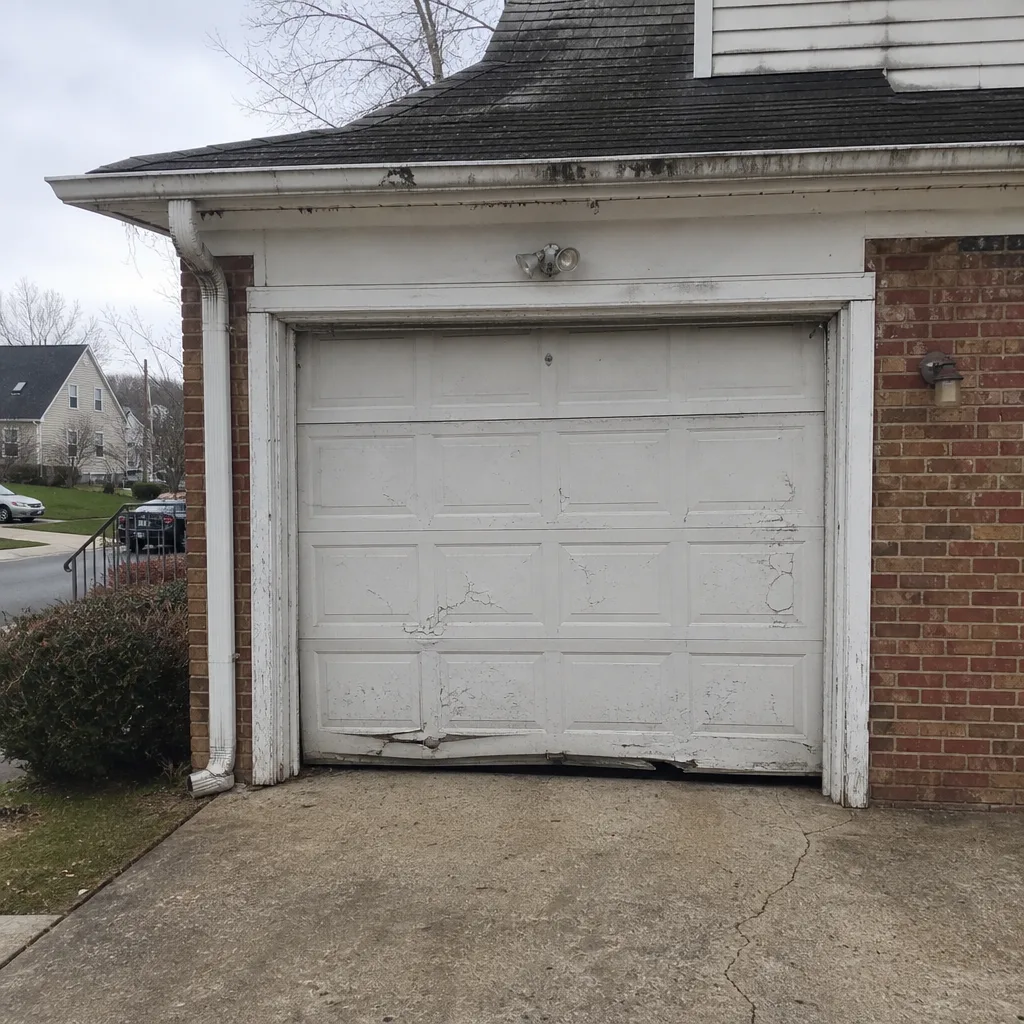 Before
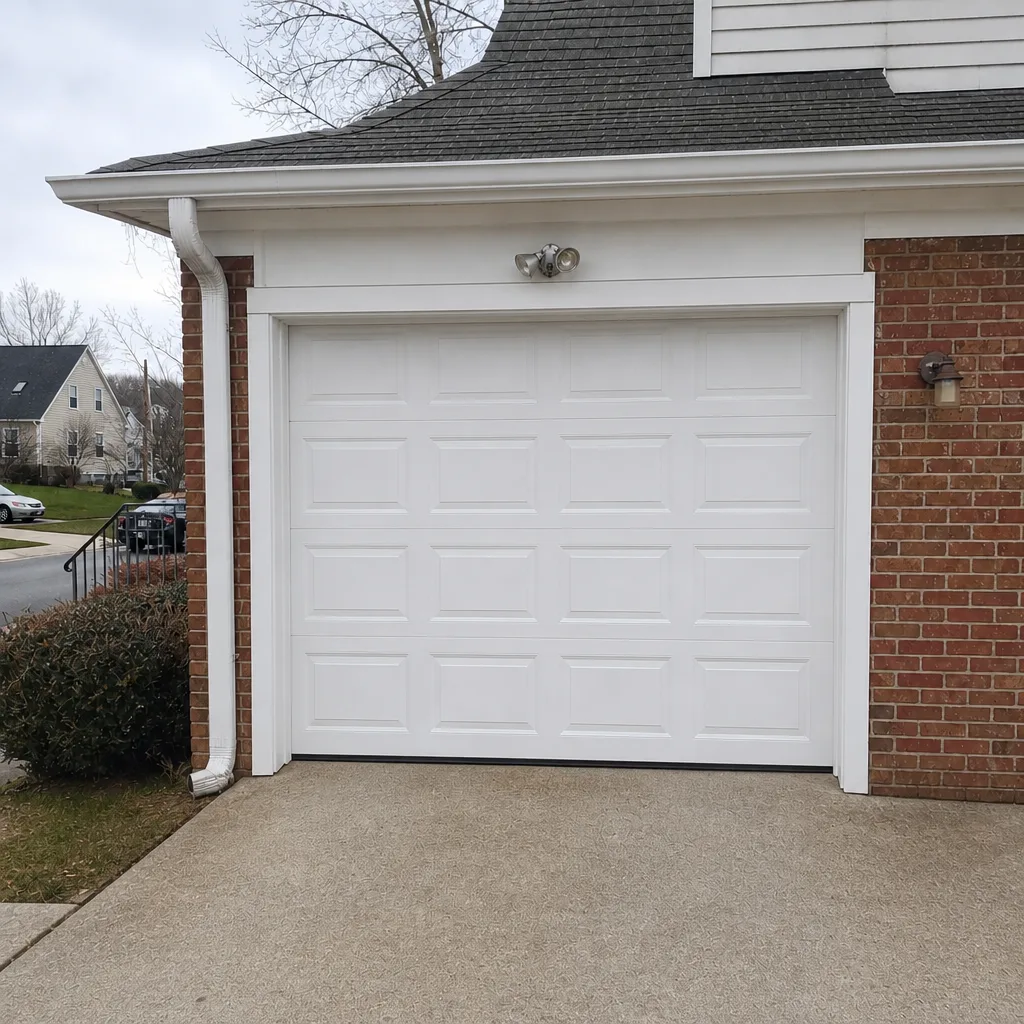 After
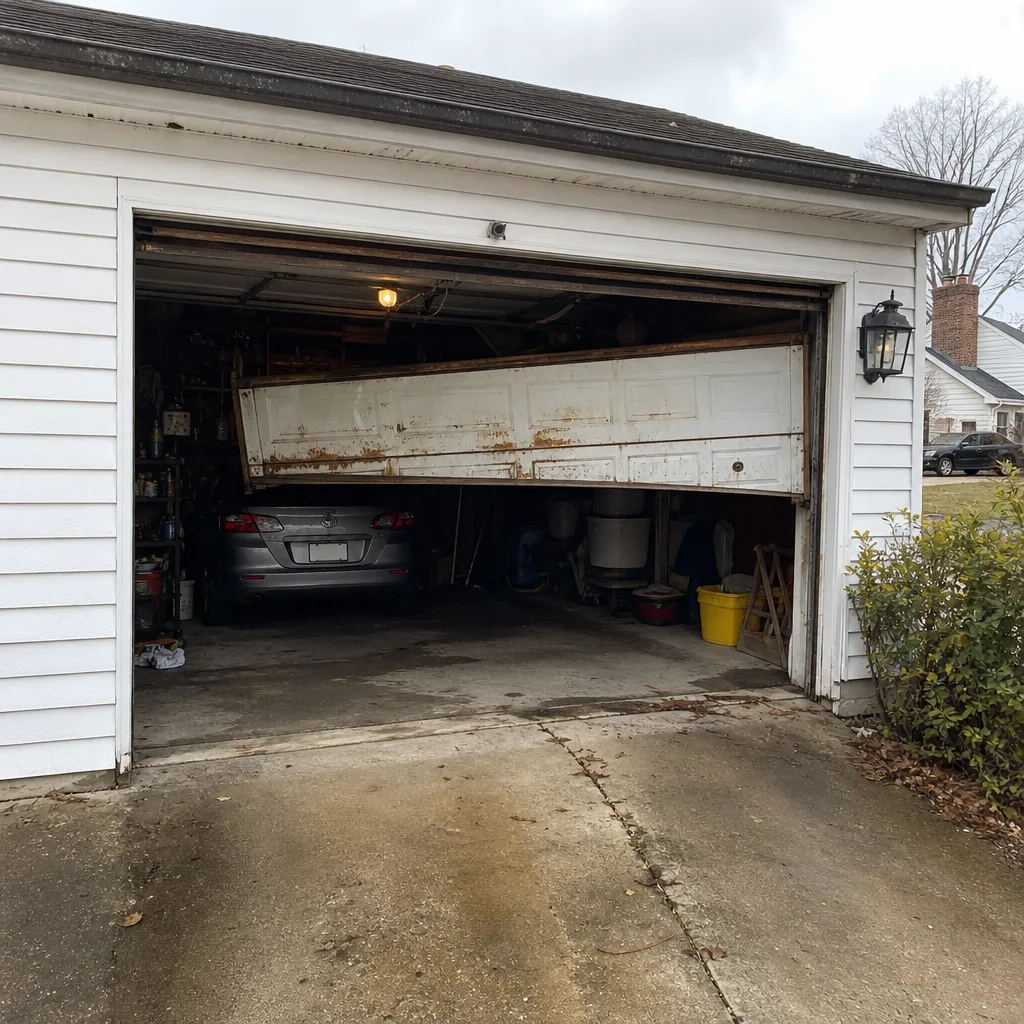 Before
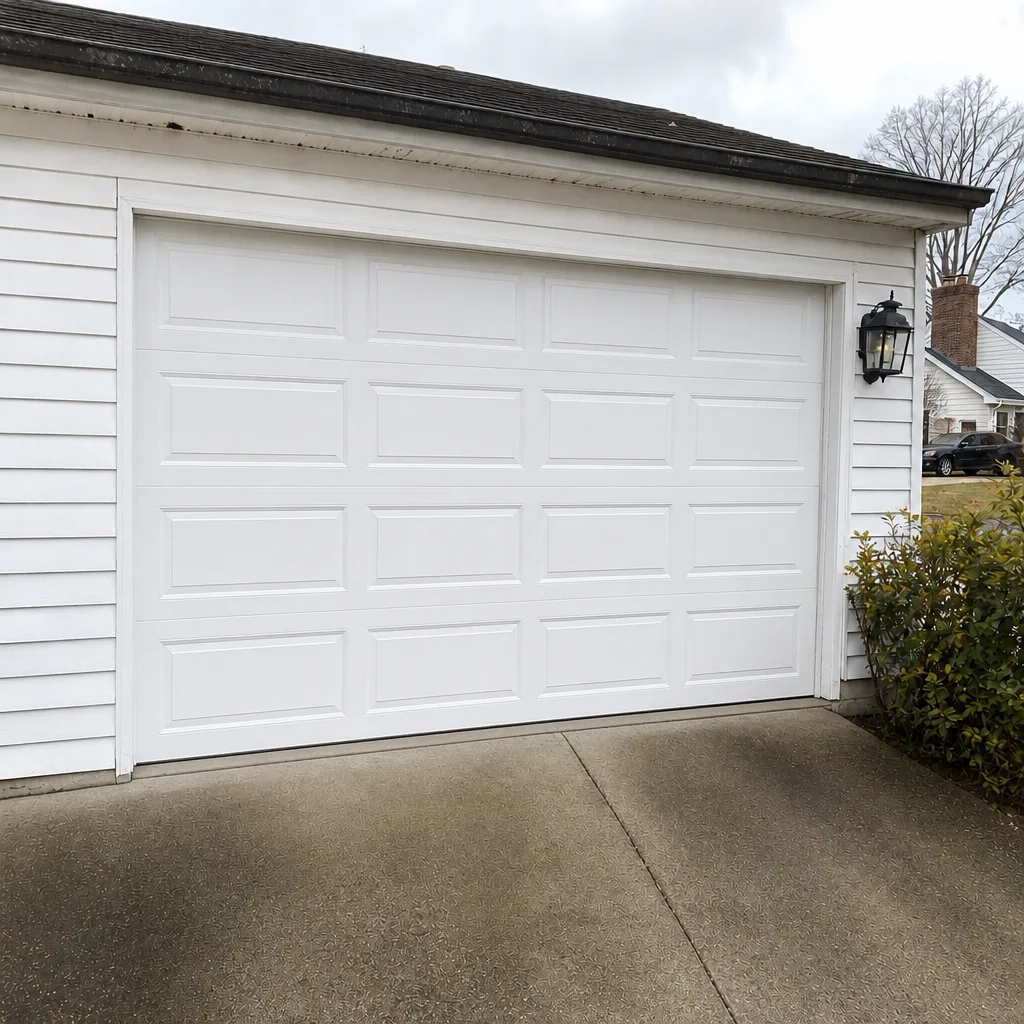 After
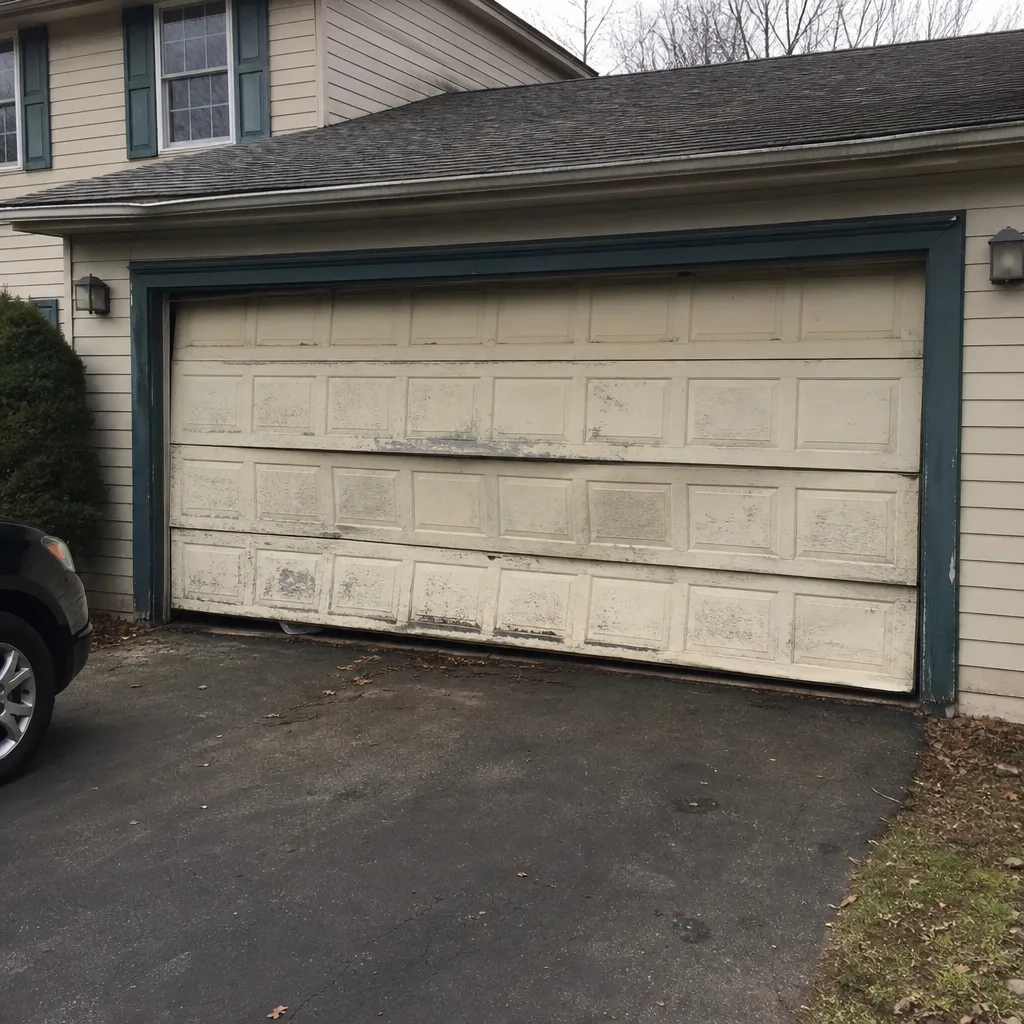 Before
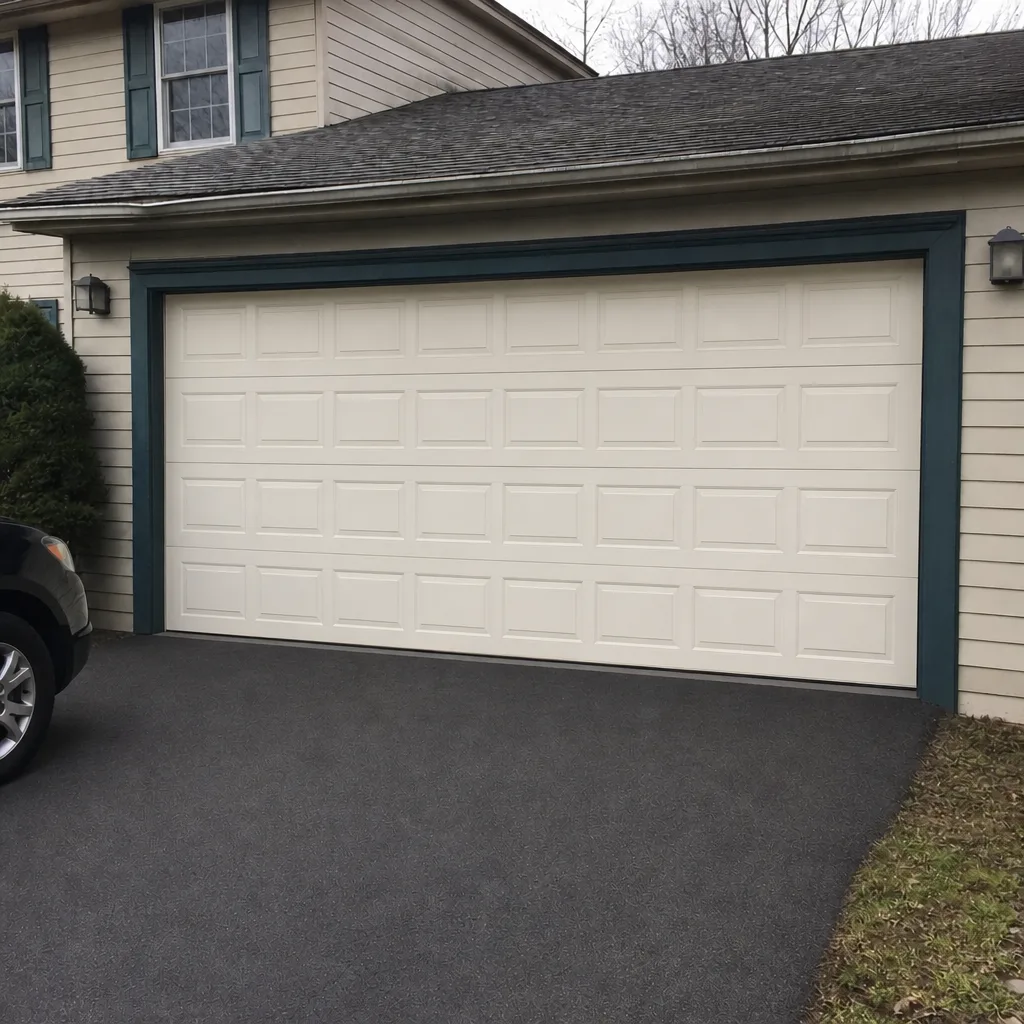 After
When to Call a Professional
Some jobs are fine to think through on your own, and some need a trained technician on-site. Call a professional if the door is off its track, if a spring has visibly broken, if the door won’t balance, if the opener reverses inconsistently or not at all, or if you’ve noticed the door sagging on one side. Older openers on pre-1994 homes that don’t meet current safety requirements are another clear case; they need to be replaced, not adjusted. And any garage door spring or cable work should always be handled by a trained technician because the tension in those parts is genuinely dangerous. If you’re in a Newark community with an HOA, we can tell you what a specific door model’s wind-load rating is before you make the architectural request, which saves a lot of back and forth. Newark Garage Door Repair Pros offers free estimates in Newark. Call (888) 561-7809. We answer 24/7. Fast dispatch from 7am to 7pm, Sunday through Friday.
Frequently Asked Questions
Usually not for a like-for-like door replacement of the same size and weight class, but a permit is required when the work changes the opening’s structure or the load path, and a new opener on a pre-1994 home can trigger additional review. Confirm with the City of Newark building department before you order. Call (888) 561-7809 for a free estimate on the door work itself.
The required rating depends on your specific address, exposure, and building height, so there’s no single number that covers Newark. The City of Newark building department can tell you the design pressure they need to see; the door’s label then has to match it. We can help you identify the correct product line and label before you order.
Yes, it can. A home inspector may flag a newer door with no permit on file as “unable to verify,” which often kicks off a remediation conversation during the buyer’s contingency period, and an insurance adjuster may ask for the installation record after a wind-related incident. Remediating after the fact usually means pulling the permit late, sometimes correcting items, and pushing the closing date.
It varies with the city’s current review queue and whether your project needs plan review or can go over-the-counter. Simple replacements move quickly; structural changes typically take longer. Installation and final inspection happen after the permit is in hand. Start the process weeks before you want the door installed so product lead time doesn’t become the bottleneck. Call (888) 561-7809 to talk through the door selection while your permit is moving.
For repair work, the price is quoted and agreed before any work starts, so the written estimate is the price. For a replacement, the measure and the door model set the price, and the written estimate is binding once you approve it. Free estimates are standard. Call (888) 561-7809. We answer 24/7. Fast dispatch from 7am to 7pm, Sunday through Friday.
Yes. Springs and cables are under extreme tension and can cause serious injury if handled incorrectly. A trained technician uses the right tools and knows how to release and balance the load safely. If a spring has broken, do not run the opener or try to lift the door manually. Call for a repair and leave the spring work to a technician.
No. The city’s code sets the legal minimum and the HOA can be more restrictive, but it can’t ask for something the city won’t permit. If your HOA’s approved list doesn’t include a door that meets the wind-load requirement, the two sides need to be reconciled before you order. We can help you build a list of models that satisfy both.
The Bottom Line
Garage door work in Newark, DE is a building-code question more often than homeowners realize. Replacement of a like-for-like door usually doesn’t require a permit, but structural changes, a change in door size or weight class, and a new opener on a pre-1994 home often do. Wind-load ratings have to be documented on the door, HOA approval is separate from city approval, and unpermitted work tends to surface at the worst possible moment: the pre-listing inspection or the buyer’s appraisal. The fix is straightforward. Confirm with the City of Newark building department before you order, keep the wind-load label and the final inspection record together, and use a contractor who’ll read you the spec sheet rather than talk past it. Then get back to the door.
For help with a Newark garage door project, the team at Newark Garage Door Repair Pros handles repair, opener work, spring repair, and full new-door installation across eight major residential brands. Call (888) 561-7809 for a free estimate on the work itself. We answer 24/7. Fast dispatch from 7am to 7pm, Sunday through Friday, closed Saturday. Our technicians have up to 10 years of experience and can walk you through the wind-load question while the permit process is moving.
Written by the team at Newark Garage Door Repair Pros.